

Confession time: I, Alexa Jeanne — a self-reported connoisseur for all 24 years of my life — had no idea there was more than one type of dark chocolate until my own father became a chocolate maker. Sure, I knew the basics. Milk chocolate is not dark chocolate is not extra-dark chocolate. There was a difference between Lindt 70% and Lindt 90%. I'd baked chocolate chip cookies before, so I knew semi-sweet chips from bittersweet. That was it. That was the entire knowledge base. Then my dad started planting cacao trees on our family farm, and I learned that I had been, essentially, eating chocolate with my eyes closed.
Tasting is associations
Here's the thing my mom says — and which it took me embarrassingly long to fully understand — about how tasting actually works. You cannot say a bar tastes like cherry unless you already know what cherry tastes like.
This sounds obvious, and then you sit with it for a minute and realize it's doing a lot of work. Every flavor you "identify" is your tongue and your nose finding the closest match in your memory and handing you the word for it. The wine reviewer who picks out blackberry, tobacco, oak isn't using better receptors than you. They've just tasted more blackberries and more tobacco and more oak, more deliberately, more often, and the references are sitting closer to the front of their mind. Tasting isn't a separate skill from remembering. It's a kind of remembering.
This is why your second tasting will be better than your first, and your tenth will be better than your second — not because the chocolate is different, but because your library is bigger. It also means there's no wrong answer in tasting. If a bar tastes to you like the smell of your grandmother's kitchen, that is what it tastes like, to you. The marketing copy on the back might say molasses and dried fig and you might be picking up something completely different. Both can be true. The bar contains a lot of compounds. You and the maker have different libraries. Trust yours.
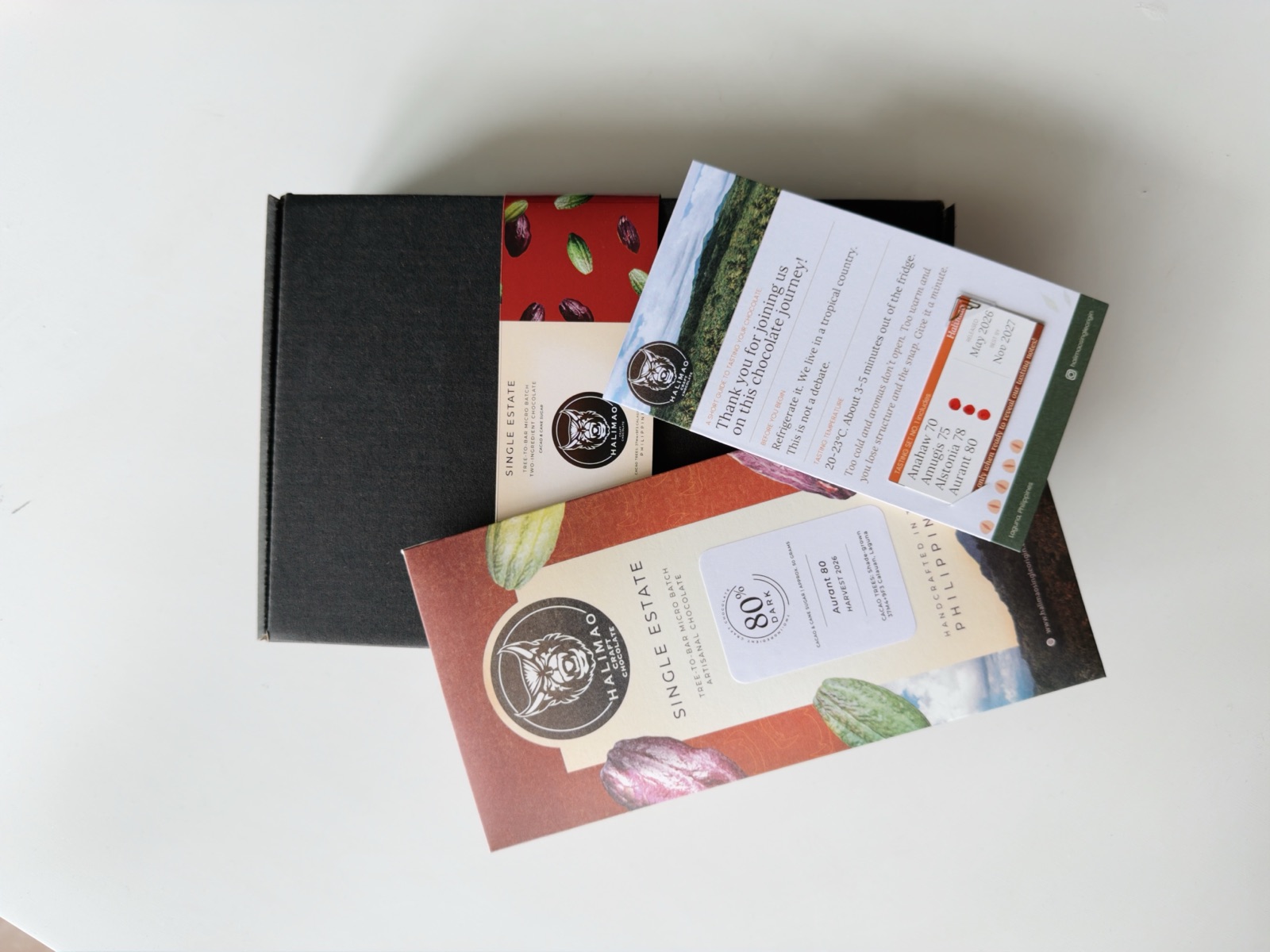
If you got the tasting card with your May set, this is the longer version of that conversation. If you didn't get the May set, no problem — this stands alone. The card was a quick reference. This is the slower one.
Where, when, and how you actually do this
A real tasting is a small commitment of attention. Not a precious one — you don't have to sit cross-legged on the floor. But you do have to not be eating it on the train.
A few things that matter, roughly in the order they matter:
- The bar is at the right temperature. The May card said 20–23°C — about three to five minutes out of the fridge. (And yes, the fridge. We said it then, we'll say it again. We live in a tropical country. This is not a debate.) Too cold and the bar is just sweet and waxy. Too warm and you lose the snap.
- You haven't had coffee in the last hour. Or wine. Or anything strongly flavored. Coffee in particular flattens your palate in a way you don't notice until you don't drink it for an hour and then suddenly chocolate has a whole second floor you didn't know existed. Water is fine.
- You're somewhere reasonably quiet. Tasting shares bandwidth with the rest of your brain. If the TV is on and someone is asking you about dinner and your phone just buzzed, you'll get maybe forty percent of the bar. You paid for the other sixty percent. You may as well take it.
- You have a few minutes. Four or five. The first tasting goes faster than you think.
What you're actually doing when you taste
The May card listed five steps — look, smell, snap, taste, reflect. Here's what each one is for.
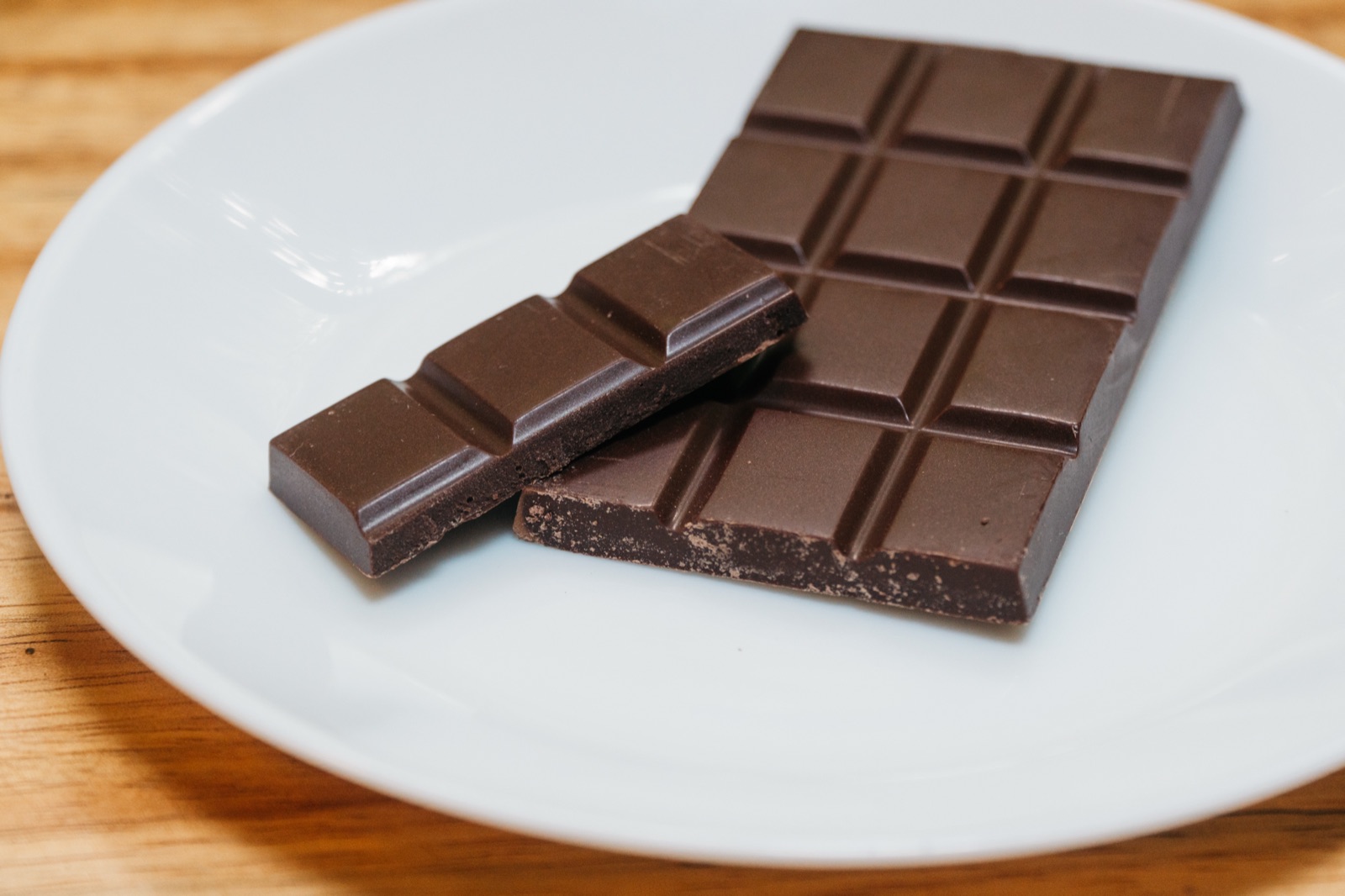
Look. Properly tempered chocolate has a slight sheen. The surface looks smooth and even. If the bar looks dull or chalky, or has a faint white film (called bloom), it's not bad to eat — the fat crystals have just lost their alignment. Bloom usually means the bar was temperature-shocked. Halimao bars should look glossy. If yours doesn't, that's information about storage, not making.
Smell. Bring the bar up to your face — not just past it. The aromatic compounds want to be in the air, not the solid. You're smelling for the family: fruity, roasted, floral, earthy. Don't try to identify exactly what. Just notice.
Snap. Break a piece off and listen. Properly tempered chocolate breaks with a clean, audible snap — the cocoa butter has crystallized into the right form (there are six possible forms, four of them are wrong, this gets into the weeds). The break exposes fresh surface area. Smell again. Something new opens up.
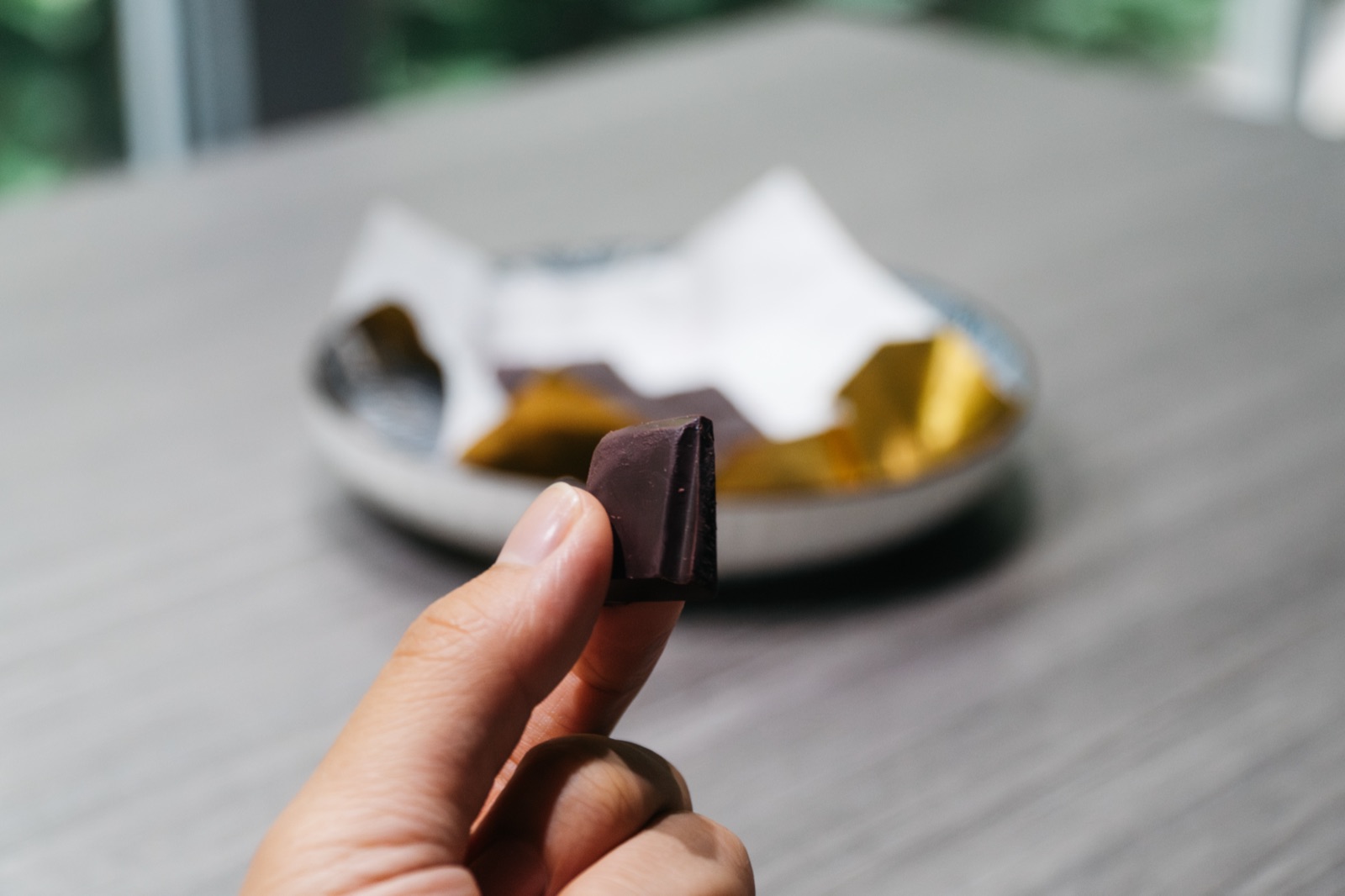
Taste. Don't bite. Place a piece on your tongue, near your back molars, and let it sit. Cocoa butter melts at body temperature — about 33–34°C, just slightly below your mouth — which is why chocolate melts the way it does. The slower you let it go, the more you'll get.
Reflect. This is the step everyone skips. After the bar has melted, what's still there? The finish — what's still on your palate a full minute later — is where single-origin chocolate distinguishes itself from supermarket chocolate. Mass-produced bars have a flat finish. Halimao bars have a long one.
Bonus: retronasal aroma. After swallowing, close your mouth and exhale slowly through your nose. The air passing back up your throat carries aromatic compounds with it — flavors you didn't catch the first time. Most of what we call "flavor" is actually smell. Try this once and you'll feel like you just unlocked a feature.
What you're tasting for
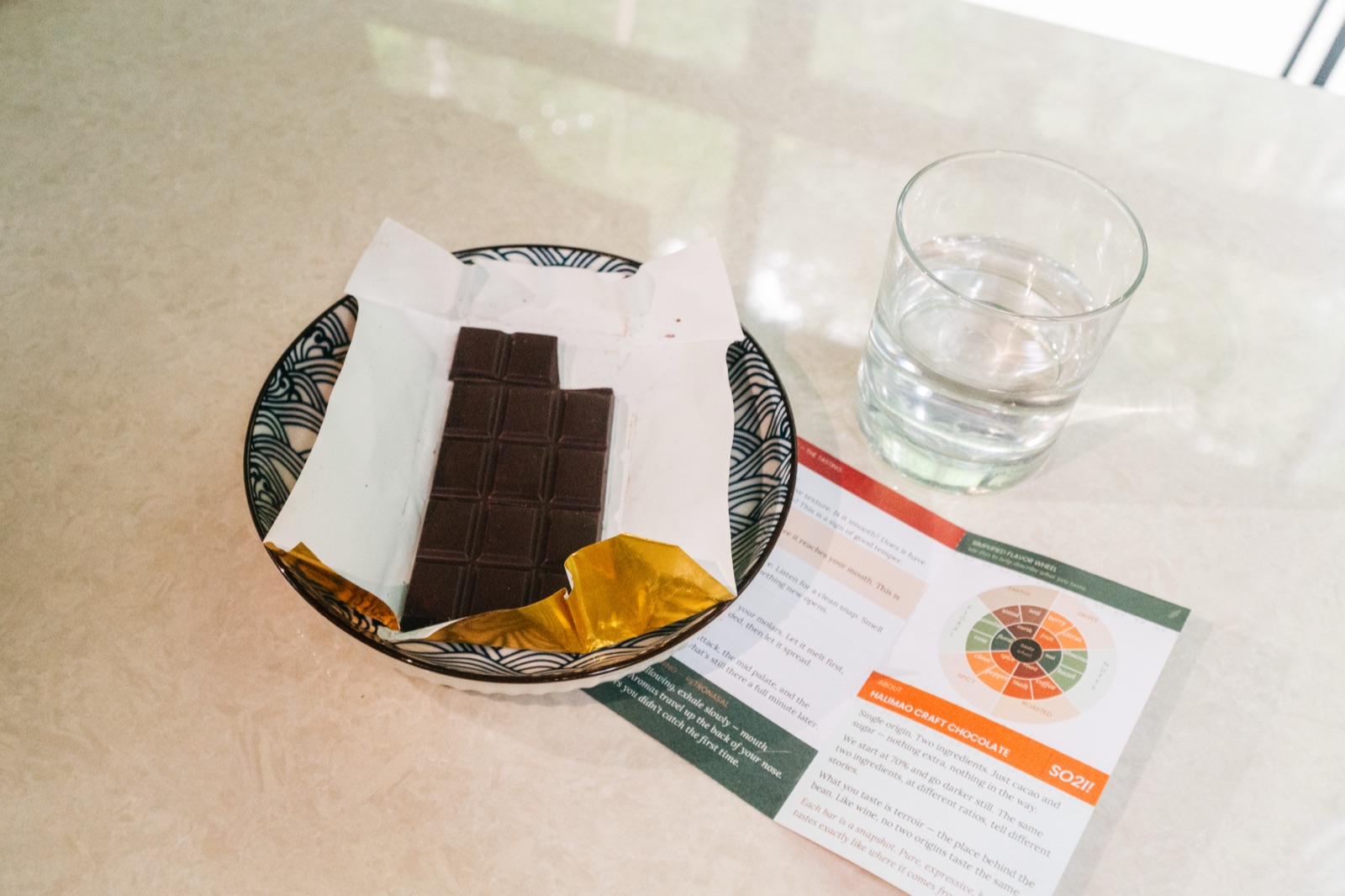
The May card had a simplified flavor wheel: fruity, nutty, roasted, spicy, floral, earthy. Six families. Most beginners catch two or three. That's a perfect starting point.
Fruity is the family that surprises people most. Chocolate isn't supposed to taste like fruit, in the way most of us grew up understanding chocolate. But Philippine cacao often carries berry, citrus, sometimes a tropical-fruit something hard to name. This is the cacao, not added flavoring.
Roasted is what supermarket chocolate mostly tastes like. Coffee, malt, the cooked-darker end. Roast level is one of the biggest decisions a chocolate maker makes. My dad has spent years dialing this in.
Nutty often hides in the mid-palate. Almond, hazelnut, a brown-buttery something.
Earthy is the family that ties a bar to its place. Wood, soil, sometimes something mossy. Terroir, the same word used for wine. If you can taste it, you're tasting Laguna.
Floral and spicy come and go with the harvest. A wet season produces different beans than a dry one. The same trees, the same dad, the same process — and a January bar will still taste slightly different from a June one.
You don't need to identify every family every time. Most bars give you two or three clearly, one or two faintly, the rest not at all. The wheel isn't to be exhaustive — it's vocabulary your tongue can point to.
Is Halimao really dark chocolate?
The most common note from the first drop is disbelief. People see 75% or 78% on the label, taste it, and don't believe the number — because where's the bitterness? We've even had milk-chocolate drinkers reorder the 75%, which is either a contradiction or a compliment. We're choosing compliment.
For the record: 60% cocoa is the floor for calling something dark chocolate. Halimao starts at 70% and goes darker still. The percentages are real — single-origin cacao and a careful roast just mean the bitterness you're bracing for never quite arrives.
Things that will get in your way
They eat it too cold or too warm. Already covered. Mentioning again because it's the single biggest thing.
They bite into it. Biting bypasses most of the tasting. Let it melt. I know it's hard. The bar is right there. Let it melt anyway.
They taste against the marketing copy. Don't read the flavor notes before your first taste. If you do, your brain goes looking for what you've been told to find, and you'll either find it (suggestion is powerful) or feel slightly stupid for not finding it. Both are bad. Trust your palate first, then read the notes, then taste again.
They taste too many bars in one sitting. Palate fatigues after three or four. Drink water. Come back tomorrow.
They taste right after toothbrushing. Sodium lauryl sulfate, the foaming agent in most toothpaste, suppresses sweet receptors and amplifies bitter ones for about half an hour. Wait.
They eat it standing up in the kitchen, distracted. I do this. I am the worst offender of this. The bar deserves better than the standing-in-the-kitchen experience. So do you.
What gets easier
The fifth bar tastes better than the first, and the twentieth better than the fifth — not because the bar is different, but because your library is bigger. The vocabulary gets richer. You start telling roast levels apart. You start picking up things in the finish that you couldn't detect at all the first time.
You also start noticing the same flavors in unexpected places. A roasted bar will remind you of a coffee. A floral one will remind you of a tea your grandmother used to make. The library doesn't care about categories. It connects what it connects. The longer you taste, the more those connections show up.
Hosting a group blind tasting
If you want to skip the slow-build version of all this, host a group tasting. It's the fastest way to grow your library, because everyone else's tongue becomes a kind of borrowed reference for yours.
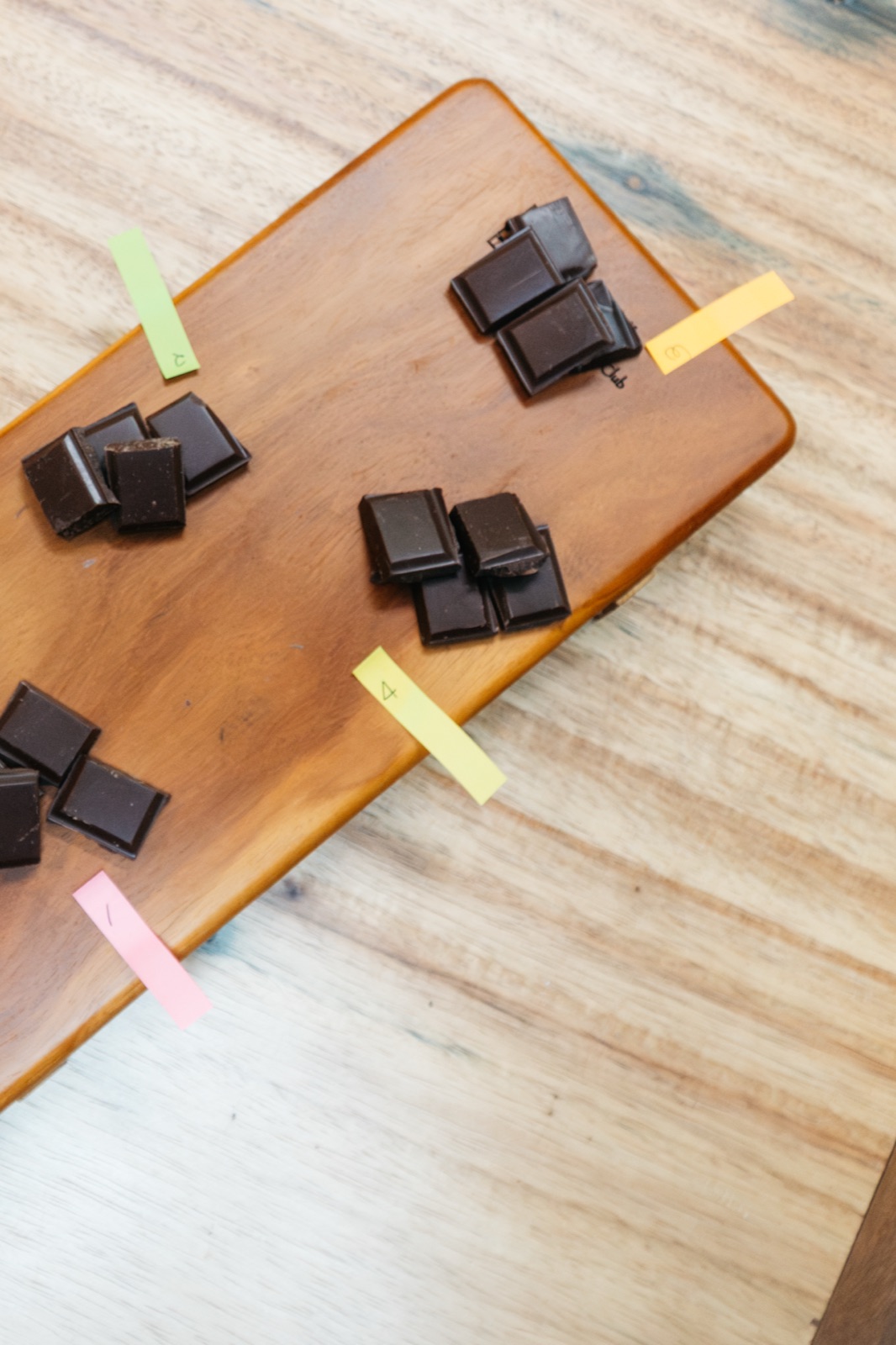
Get four or five bars — two or three Halimao bars (different harvests, different roasts) plus one or two from other makers for contrast. Cut each into individual tiles. Wrap each tile in foil or paper labeled with a letter (A, B, C, D). Keep the key hidden — only you know which letter is which bar.
Hand out paper to each person with the letters down the side and prompts: what does it smell like, what does it taste like, what's the finish, score out of five. The May card's tasting form works well for this.
Then taste together, one bar at a time, in the same order. No talking during the tasting itself — silent, slow, let everyone form their own impression first. Then everyone shares: what they got, how they ranked the bars. Then reveal what the bars actually were.
What you'll find is that people pick out wildly different things in the same bar. The thing one person calls berry the other calls plum. The disagreement is the data. The bar didn't change between mouths.
Practical: don't taste more than four or five bars in a sitting. Water and plain crackers between bars. No wine — save that for after. Keep the reveal until the end, or people stop tasting and start confirming.
A blind tasting also reliably converts the friend who insisted she "doesn't care about chocolate" into someone who suddenly cares quite a lot.
So: refrigerate the bar, take it out, let it sit, slow down, smell it, snap it, smell it again, let it melt, notice what stays. That's the whole thing.
The library is the thing. You build it one bar at a time. Every flavor you taste joins the collection, and the next time you taste it — in chocolate, in coffee, in fruit, in your grandmother's tea — you'll have a word for it. Some of those words are ours and some are yours alone. That second category is what makes tasting yours.
The June batch is on its way. The trees are doing well. The dogs are well.
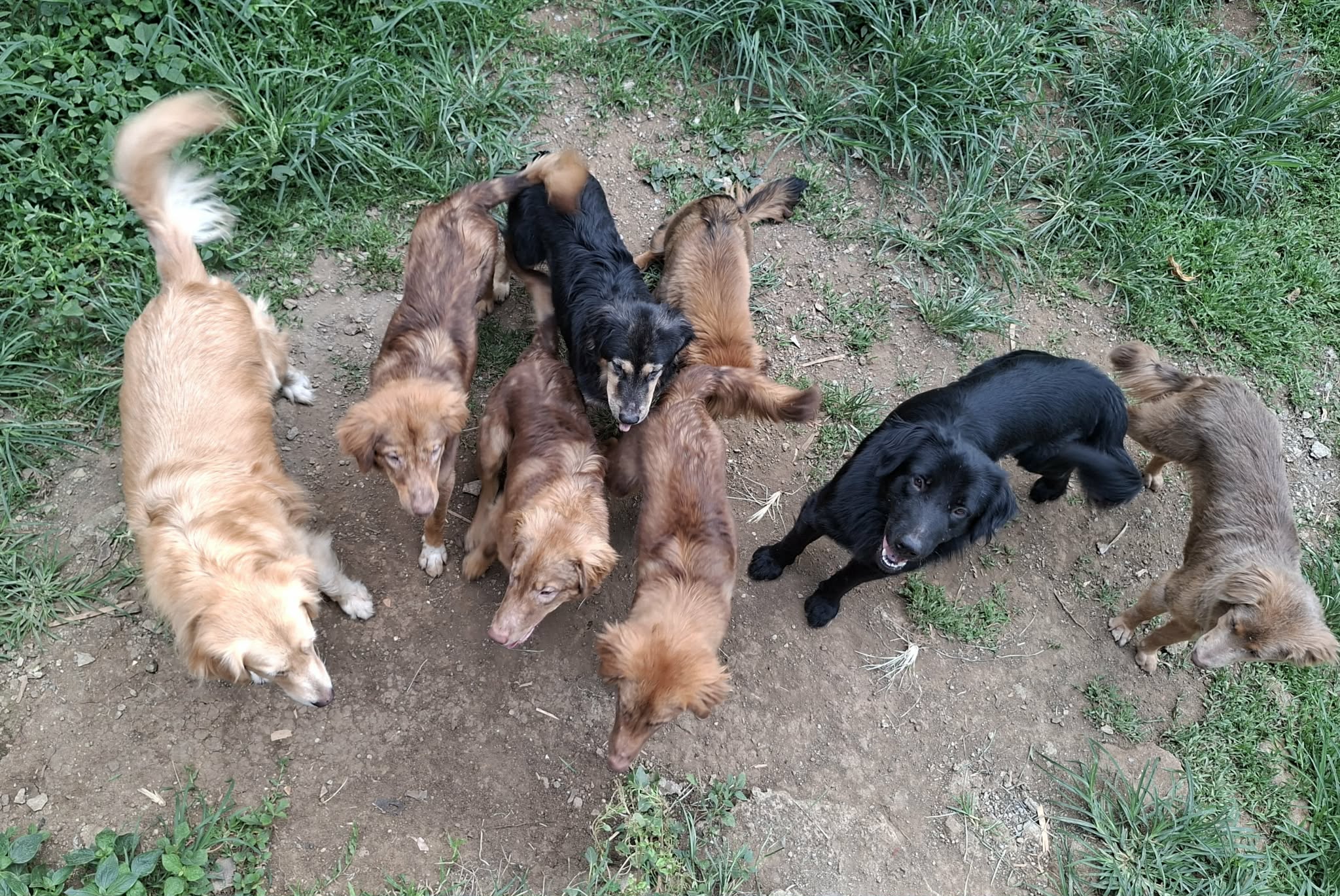
The promised dog update, since April swore it would come up again. Last October brought a puppy boom — courtesy of Twix and Ruthie, two-and-a-half-year-old littermates who became mothers within weeks of each other. Their pups are seven months old now and growing robustly: curious, rambunctious, and entirely convinced that Homestead 2 belongs to them. They run it like they own it.
On a sadder note — and true to character for our semi-feral (though fully vaccinated) pack — one of them found a gap in the fence we didn't know was there and caught up with an unsuspecting chick from the nearby coop of native chickens and bengala. The poor chick didn't stand a chance. I suppose that's part of the circle of life on a farm: not always cute, occasionally feathered, mostly out of our hands.
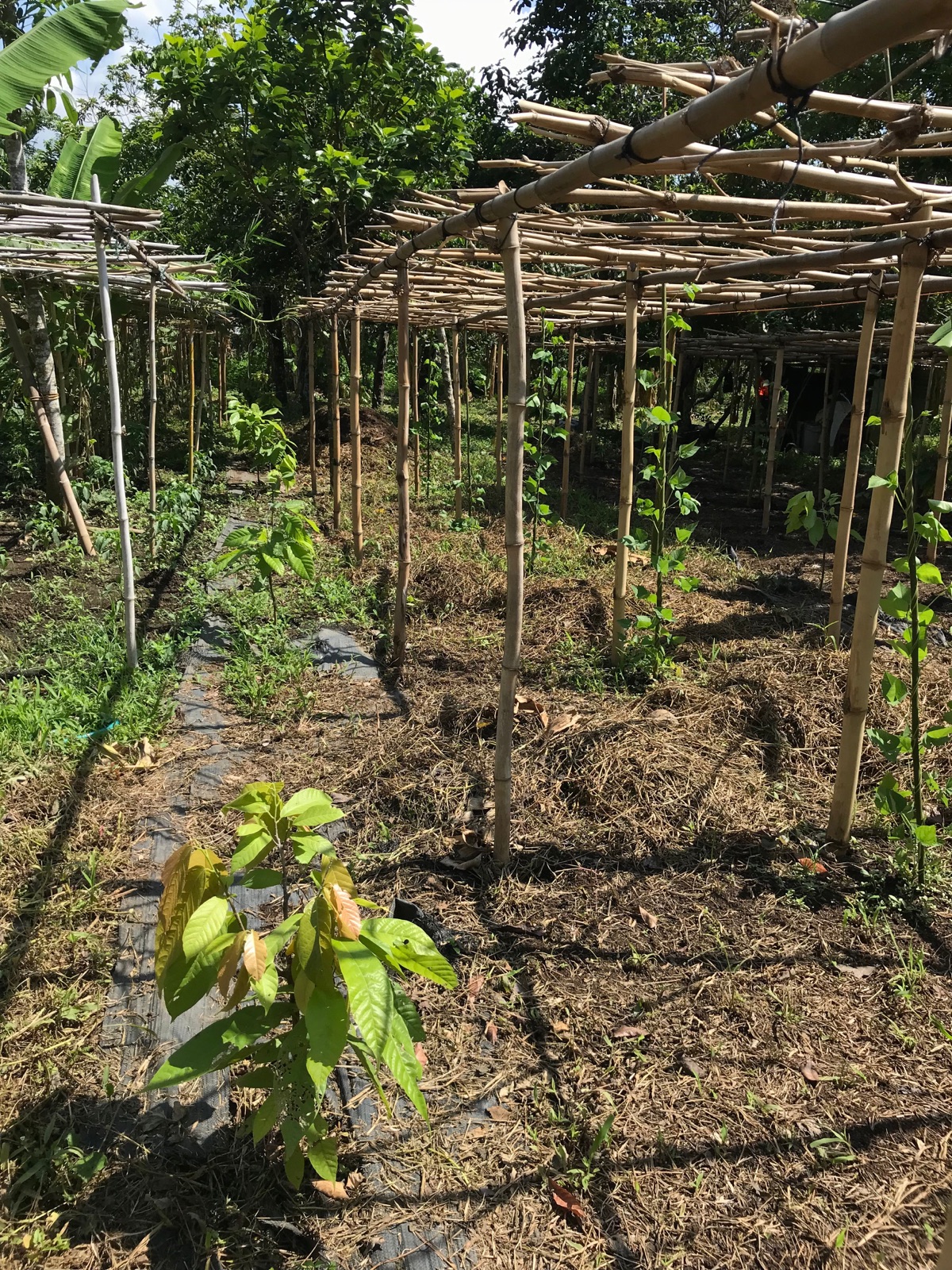
This season's planting: a stand of year-old grafted criollos coming up under the shade of a vegetable trellis, and a fresh round of grafted criollo seedlings just gone in beside the lima-bean trellises.
If you're reading this, you're part of the Halimao Circle — first to hear about new batches, new variants, seasonal releases, and what's happening on the farm. Forward this to someone who should be on the list. Sign up here.
The fastest way to get someone to take their chocolate seriously is to let them have ours.